
We Saw the Video. Now We Have to Tell the Truth.
There is a moment in the now viral video that feels impossible to shake. A North Texas mother, doubled over in pain, pacing the floor of a hospital lobby. Her body is clearly in labor. Her cries are raw and unfiltered. Yet the room around her remains still.
A woman in the waiting area watches with growing concern. A young child turns their head at the sound of her voice. And behind the desk, hospital staff continue with routine questions. Date of birth. Insurance information. Identification. The mother clutches a nearby pillar as another contraction hits. Her knees buckle and her voice breaks. Still no movement toward her.
It is a scene that feels surreal until we remember that for many women in America, this is not surreal at all. It is familiar.
According to the CBS investigation, the mother was left laboring in the lobby for close to twenty minutes while staff focused on paperwork and registration. Twenty minutes in the most vulnerable state a human body can experience. Twenty minutes of visible, audible suffering that did not translate into urgency.
The hospital later issued a statement saying their team followed protocol. Her video, watched millions of times, tells another story entirely.
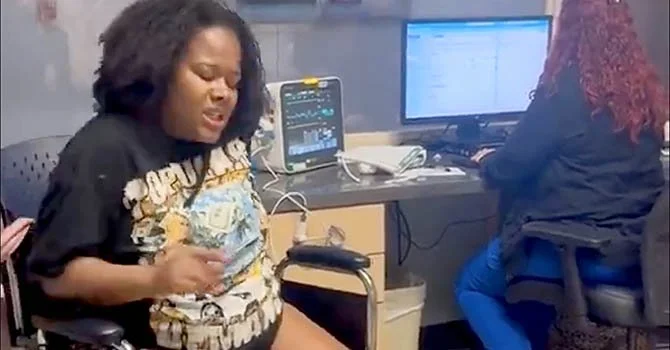
Dallas pregnant mom, neglected while laboring.
What happened in that lobby is more than a procedural lapse. It is a portrait of a deeper cultural problem. A problem that grows in the quiet space between a woman's pain and a provider's response. A problem made of disbelief, dismissal, and the dangerous assumption that laboring women can wait a little longer.
We have heard versions of this story again and again. Women sent home during active labor. Women told their pain is normal when their bodies are signaling distress. Women begging to be taken seriously. Women whose cries are softened or minimized by systems that prioritize efficiency over empathy.
Black and Brown women bear an even heavier burden. Their pain is more likely to be underestimated. Their concerns brushed aside. Their emergencies labeled exaggerations. Their outcomes, according to national data, far more likely to turn fatal.
So when we watch this Texas mother pleading for help in a public lobby, we are not witnessing an isolated event. We are witnessing the tip of an iceberg that has been visible for decades. An iceberg made of policies, prejudices, staffing shortages, training gaps, and a devastating lack of accountability.
But we are also watching something else. We are watching a woman refuse to be silent.
Her decision to record what happened has shifted the story from a private trauma to a public reckoning. It has forced a hospital to answer difficult questions. It has sparked outrage, conversation, and reflection. It has given other mothers permission to speak up about their own experiences.
Sometimes the change we need begins with someone brave enough to pull out a phone in a moment of fear and frustration. Sometimes it begins with one mother saying, with her whole body, that this is not acceptable.
There is no comfort in this story. Nor should there be. But there is clarity.
Birth should not require survival instincts. Mothers should not have to fight to be heard. Pain should not need to be recorded for someone to respond.
This story deserves more than a viral moment. It deserves action. It deserves reform. It deserves a system that sees a woman in labor and responds with urgency, compassion, and care every single time.
Anything less is not a protocol issue. It is a failure of humanity.
And we have the power to change it.
